Global Skin Cancer Awareness Month
By Joan Pohutsky, DNP
It’s springtime in the District and the city is coming alive again! Residents are bidding farewell to the cold winter and welcoming the rejuvenating spring season. With this transition comes the month of May, synonymous with blossoming flowers. In the medical community, May also holds a more significant meaning as Skin Cancer Awareness Month.
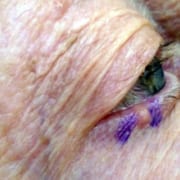
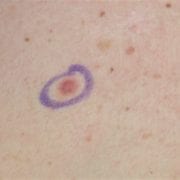
Spring symbolizes renewal, growth, and the ability to rejuvenate and heal -similar to the natural abilities of human skin. Much like blossoming flowers, human skin cells divide and grow to shield us from external factors. When this growth goes awry, this can lead to conditions like skin cancer.
The Science Behind Your Suntan
As we venture outdoors more often to enjoy the beauty of spring, you might be tempted to work on a suntan. Before you do, however, let’s define what a suntan really is: an injury to the skin in response to two types of ultraviolet radiation (UV). Both types of ultraviolet rays damage the skin and can lead to skin cancer.
- UV-A rays penetrate deeper into the skin to accelerate signs of skin aging such as wrinkles, sunspots, and leathery skin.
- UV-B rays are responsible for sunburn. When skin is exposed to UVB rays, the outermost layer (the epidermis) thickens and produces excess melanin, causing the skin to darken in an attempt to prevent further damage to the vulnerable layers below.
Tanning Myths
There are several myths that should be dispelled about tanning:
- Tanning is NOT healthy.
- Tanning does NOT prevent sunburn.
- Tanning does NOT decrease the risk of skin cancer.
What’s the truth about tanning?
- Tanning DOES cause skin cancer.
- Tanning DOES increase wrinkles, dark spots, and other signs of aging.
- Tanning is a sign of injury to the skin and there is NO benefit to a “base tan.”
Supplements and Skin Health
Besides reducing your sun exposure by wearing sunscreen, seeking shade, and covering up, what else can you do to help prevent skin cancer?
Emerging research suggests certain nutrients may play a pivotal role in reducing risks of developing skin malignancies.
- Nicotinamide (Vitamin B3): supplementation is associated with an overall lower rate of new nonmelanoma skin cancers and actinic keratoses (pre-skin cancers). Notably, a new study recently found that higher doses of similarly structured niacin can increase overall cardiovascular risks including irregular heartbeat and vascular inflammation. As holds true to considering any new medication or supplementation, we recommend that you consult with your primary care physician prior to beginning to use.
- Antioxidants (Vitamins A, C, & E, plus selenium, polyphenols, lycopene, beta-carotene): prevent and slow damage to cells caused by free radicals, thus neutralizing effects of UV radiation (found in fruits and vegetables). Polypodium Leucotomus is one such antioxidant derived from a fern and plays a role in reducing inflammation and DNA damage in skin cells, thus reducing the risk of skin cancer and photoaging. Polypodium Leucotomus is the active ingredient in Heliocare supplementation.
- Vitamin D: plays a role in controlling abnormal multiplication of skin cells (found in fortified dairy products, fatty fish, and supplements). While the sun is a natural source of vitamin D, it is safer and more reliable to obtain this from diet and supplementation due to prolonged sun exposure increasing cancer risk.
Nutrients and supplements can influence the overall health, aging, and appearance of our skin.
- Omega 3 supplementation (fish, nuts, seeds, and vegetables): strengthens skin membranes to prevent moisture loss, has anti-inflammatory properties to reduce redness and swelling, and can aid in the healing process when skin is damaged.
- Zinc (found in meat, fish, and seafood): acts as a physical barrier to reflect UV rays and decreases inflammation, thus playing a role in wound healing and skin integrity.
- Metformin: a drug classically utilized for patients with type 2 diabetes, has antiaging properties including decreasing chronic inflammation and oxidative stress. There are observational studies to suggest that long-term use can be associated with reduced skin cancer risk.
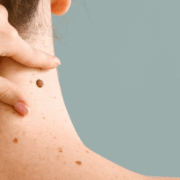
A healthy diet and lifestyle contribute to skin health, but sun protection remains the cornerstone of skin cancer prevention. This includes applying broad spectrum sunscreens SPF 30 or higher and reapplying every two hours, seeking shade during peak sunlight hours, and wearing ultraviolet protection factor (UPF) rated sun clothing as well as wide-brimmed hats and sunglasses. Check your skin for new, changing, or suspicious lesions, and enjoy everything spring has to offer!
Sources
Chen A, Martin A, Choy B, et al. A Phase 3 Randomized Trial of Nicotinamide for Skin-Cancer Chemoprevention, 2015; New England Journal of Medicine; N Engl J Med 2015;373:1618-1626; DOI: 10.1056/NEJMoa1506197
Cruz RYMS, Arévalo SV, Rashid A, Jara MRA, Prado MSA. Antioxidant and photoprotective potential of Polypodium leucotomos. Explor Med. 2022;3:607–16. https://doi.org/10.37349/emed.2022.00117
Dong Y, Wei J, Yang F, Qu Y, Huang J, Shi D. Nutrient-Based Approaches for Melanoma: Prevention and Therapeutic Insights. Nutrients. 2023; 15(20):4483. https://doi.org/10.3390/nu15204483
El Mansouri M, Essaddouki S, Mouradi M, et al. Evaluation of the effectiveness and safety of combined oral and topical photoprotection with a standardized extract of Polypodium leucotomos (Fernblock®). Photodermatol Photoimmunol Photomed. 2023; 39: 607–612. doi:10.1111/phpp.12904
Ferrell, M., Wang, Z., Anderson, J.T. et al. A terminal metabolite of niacin promotes vascular inflammation and contributes to cardiovascular disease risk. Nat Med 30, 424–434 (2024). https://doi.org/10.1038/s41591-023-02793-8
Michalak M, Pierzak M, Kręcisz B, Suliga E. Bioactive Compounds for Skin Health: A Review. Nutrients. 2021; 13(1):203. https://doi.org/10.3390/nu13010203
Sahdeo Prasad, Subash C. Gupta, Amit K. Tyagi, Reactive oxygen species (ROS) and cancer: Role of antioxidative nutraceuticals, Cancer Letters, Volume 387, 2017, Pages 95-105,
ISSN 0304-3835, https://doi.org/10.1016/j.canlet.2016.03.042. https://www.sciencedirect.com/science/article/pii/S0304383516302026
Sami Raza, Firas Al-Niaimi, Faisal R Ali, A systematic review of the uses of metformin in dermatology, Clinical and Experimental Dermatology, Volume 48, Issue 2, February 2023, Pages 73–79, https://doi.org/10.1093/ced/llac027
How to Prevent Skin Cancer. American Academy of Dermatology (2024). Retrieved from