
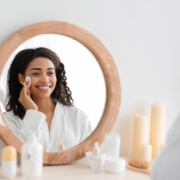
Taking Control of Your Skin Care Routine
By Koji Ota, MD
If you don’t have a daily skin care routine, it can feel overwhelming to start one. -There is a dizzying amount of information and recommendations, whether it be from skin care brands advertising their products or a TikTok influencer raving about the newest skin care hack. Contrary to some recommendations, you don’t need 12 steps or to break the bank to have an effective skin care routine. Here are some recommendations to get you started:
Basic Skin Care Routine
A basic skin care routine starts with a gentle cleanser, moisturizer, and sunscreen.
- Cleanser is the important first step in a skin care regimen to clean the oil, dirt, sweat, make-up, and pollutants that accumulate on your skin throughout the day. This helps prevent clogged pores and breakouts, as well as prepare your skin for other skin care products to penetrate properly into your skin. Generally, you should select a gentle cleanser that will not overly strip your skin of moisture and oil that can lead to dryness and irritation.
Some cleansers can contain ingredients that address specific skincare problems, such as benzoyl peroxide or salicylic acid to treat acne, or some with chemical exfoliants such as glycolic acid that can help reveal a brighter complexion and correct an uneven skin tone. It’s important not to overuse these products as they can lead to irritation of the skin.
- A facial moisturizer should be applied every day to keep your skin hydrated. Dry skin can lead to flaking, and redness, and make it more prone to irritation. A moisturizer should be selected based on your skin type. For anyone with dry skin, or during dry and colder months, a thicker, more hydrating moisturizer may be needed to keep your skin adequately hydrated.
- Sunscreen is one of the most important steps in a skin care routine. Anytime you plan to be outside during the day, you should apply sunscreen with SPF 30 or higher. This will protect your skin from the sun’s harmful ultraviolet rays which lead to accelerated skin aging and increased risk of skin cancer.
Next Steps
Once you have the basics down, you can consider adding more products that contain active ingredients to address your specific concerns. Next, we will review vitamin C and retinoids.
- Vitamin C is a potent antioxidant that can protect the skin against environmental factors including sun damage and pollution. When used consistently, it can help reduce the appearance of dark spots on your skin, improve skin complexion, and help slow skin aging.
There are many formulations of vitamin C including creams and serums. Some formulations may cause irritation and lead to breakouts, so it’s important to select the products based on your specific skin type. Vitamin C should generally be applied in the morning, after cleansing and before sunscreen.
- Retinoids are a group of Vitamin A-derived chemicals that have a wide range of uses in dermatology. They are one of the most effective types of products to improve acne, fine lines and wrinkles, even skin tone, and correct dark spots.
Retinoids can vary from over-the-counter retinols to prescription medications, most often prescribed to treat acne. They should generally be used at night, after cleansing and before application of moisturizers.
It is important to note that retinoids can be drying and irritating to the skin, so you should only apply a pea-sized amount to your whole face, and to start slow; for example I generally advise my patients to start using retinoids once every other day for a couple of weeks and increasing frequency to every night if you are not having irritation. One strategy that helps reduce the irritation of retinoids is to do a “moisturizer sandwich,” where you apply a layer of moisturizer before the retinoid, followed by another layer of moisturizer after the retinoid. Retinoids should not be used by anyone that is pregnant or is actively trying to conceive.
If you have any specific questions or concerns about building a skin care routine, or if you have a skin condition, talk to a dermatologist who can help you build a skin care routine that is tailored to your specific skin needs.
References
Al-Niaimi F, Chiang NYZ. Topical Vitamin C and the Skin: Mechanisms of Action and Clinical Applications. J Clin Aesthet Dermatol. 2017 Jul;10(7):14-17. Epub 2017 Jul 1. PMID: 29104718; PMCID: PMC5605218.
Farris P. SUPPLEMENT ARTICLE: Retinol: The Ideal Retinoid for Cosmetic Solutions. J Drugs Dermatol. 2022 Jul 1;21(7):s4-s10. doi: 10.36849/JDD.SO722. PMID: 35816071.
Ludman, P. Dermatologist-recommended Skin Care for your 20s. American Academy of Dermatology. Accessed 2/16/2025. https://www.aad.org/public/everyday-care/skin-care-basics/care/skin-care-in-your-20s
Skin Care In Your 40s and 50s. American Academy of Dermatology. Accessed 2/16/2025 https://www.aad.org/public/everyday-care/skin-care-basics/care/skin-care-in-your-40s-and-50s