

UV Awareness Month: How Understanding the UV Index Can Help Prevent Skin Cancer
UV Awareness Month (July) is an important reminder that protecting your skin is about more than avoiding a painful sunburn; it’s about reducing your risk of skin cancer.
Skin cancer is the most common type of cancer, and exposure to ultraviolet (UV) radiation from the sun is one of the leading risk factors. The good news is that many cases can be prevented through simple sun safety habits and by paying attention to the daily UV Index.
Summer Fun and Hidden UV Risks
Summer is a time for outdoor activities, family gatherings, and making memories. Whether you’re spending the afternoon at a baseball game, playing a game of tennis, taking the kids to the park, relaxing at the beach, attending a backyard barbecue, or enjoying a hike with friends, chances are you’ll be spending more time in the sun.
What many people don’t realize is that UV exposure can add up quickly during these activities. Sitting in the stands at a baseball game for several hours, walking around a local festival, or spending the day at the beach can expose your skin to significant amounts of UV radiation—even if the weather feels mild or the sky is partly cloudy.
That’s why it’s important to make sun protection part of your routine whenever you’re outdoors.
The Connection Between UV Rays and Skin Cancer
Ultraviolet (UV) rays are invisible rays that come from the sun. While a little sun exposure is a normal part of life, too much UV radiation can damage the DNA in skin cells. Over time, this damage can accumulate and increase the risk of developing skin cancer.
Even if you don’t burn easily, UV exposure can still cause long-term skin damage. That’s why sun protection is important for people of all skin tones and ages.
Why Sunburn Matters
A sunburn is more than a temporary inconvenience. It is a sign that UV radiation has damaged your skin.
Research has shown that repeated sunburns, especially during childhood and adolescence, can significantly increase the risk of developing skin cancer later in life. Preventing sunburns today can help protect your long-term health.
What Is the UV Index?
The UV Index is a tool that measures the strength of the sun’s UV radiation at a specific location and time. Think of it as a forecast that tells you how quickly UV rays could damage your skin.
Before heading out to a baseball game, a picnic in the park, or a day at the beach, checking the UV Index can help you determine how much protection you’ll need.
The higher the UV Index number, the greater your risk of skin damage and the more important it becomes to take protective measures.
Understanding the UV Index
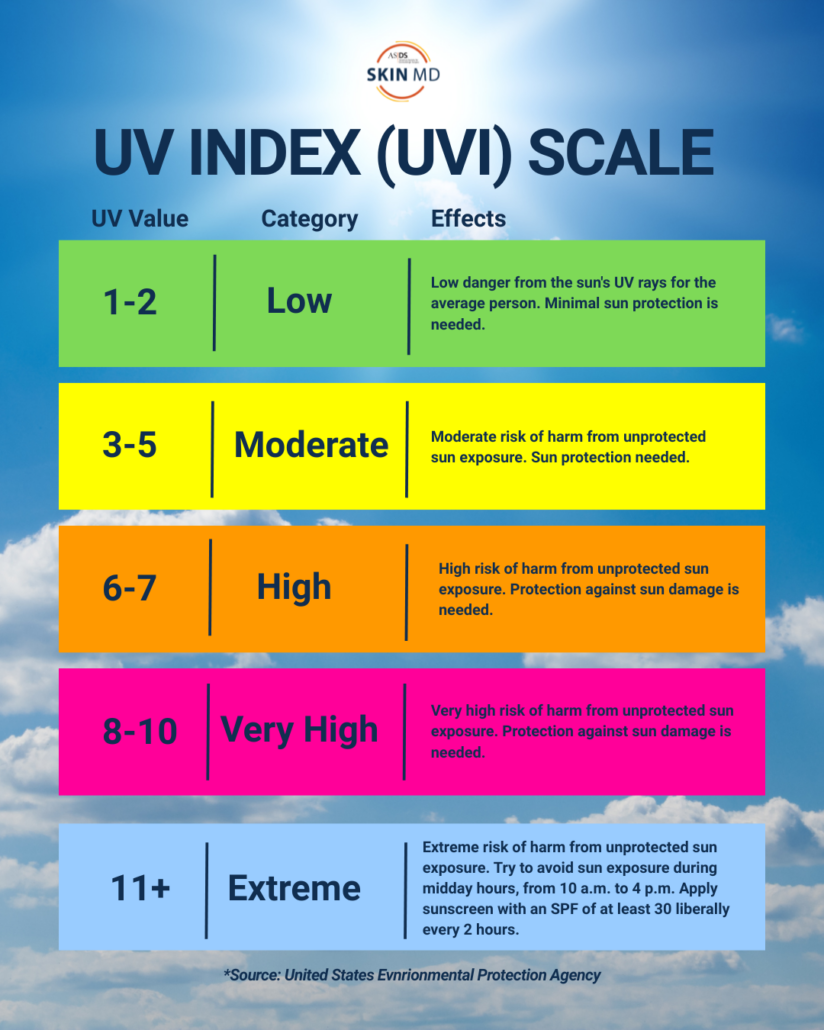
Many people assume they only need sun protection on hot summer days, but UV levels can be high even when temperatures are mild or skies are cloudy. That’s why checking the UV Index is one of the simplest ways to make informed decisions about protecting your skin.
How to Check the UV Index in Your Area
Checking the UV Index takes just a few seconds and can help you make informed decisions before heading outdoors. The U.S. Environmental Protection Agency (EPA) provides a free UV Index search tool and downloadable app that allows you to view current and forecasted UV levels based on your ZIP code or location.
Visit the EPA’s UV Index page at EPA UV Index Search Tool to check the UV forecast for your area. If the UV Index is 3 or higher, the EPA recommends taking precautions such as applying sunscreen, wearing protective clothing, seeking shade, and limiting prolonged sun exposure during peak daylight hours.
Don’t Skip Your Annual Skin Check
While sunscreen, protective clothing, and checking the UV Index are all important ways to reduce your risk of skin cancer, regular skin examinations by a board-certified dermatologist are another essential part of protecting your skin health.
Skin cancer is highly treatable when detected early, which is why professional skin checks are so important. During a full-body skin exam, a board-certified dermatologist can identify suspicious moles, spots, or lesions that may be difficult for you to notice on your own.
In addition to scheduling routine skin exams, it’s important to become familiar with your skin and monitor for any changes between visits. Contact your dermatologist if you notice:
- A new mole or growth
- A spot that changes in size, shape, or color
- A sore that doesn’t heal
- A lesion that bleeds, crusts, or itches
- Any spot that looks different from others on your skin
Simple Ways to Reduce Your Risk
Check the UV Index Daily
Making a habit of checking the UV Index can help you know when extra precautions are needed. A high UV Index means your skin can be damaged more quickly, even if the weather feels comfortable. The U.S. Environmental Protection Agency (EPA) provides a free UV Index search tool and downloadable app that allows you to view current and forecasted UV levels based on your ZIP code or location.
Use Broad-Spectrum Sunscreen
Apply a broad-spectrum sunscreen with SPF 30 or higher before attending outdoor events, heading to the beach, or spending an afternoon at the park. Reapply every two hours and after swimming or excessive sweating.
Exciting Sunscreen News!
In June 2026, the Food and Drug Administration (FDA) approved bemotrizinol, a broad-spectrum sunscreen ingredient that protects against both UVA and UVB rays. Used widely in Europe, Asia, and Australia, dermatologists and sunscreen experts have been anticipating this decision for years.
UVB rays are primarily responsible for sunburn, while UVA rays penetrate deeper into the skin and contribute to premature aging, hyperpigmentation, and an increased risk of skin cancer. Effective protection against both types of ultraviolet radiation is essential for comprehensive sun safety.
Although the approval itself is exciting, manufacturers will need time to incorporate the ingredient into new formulations and bring products to market.
While we wait for bemotrizinol products, AIM at Skin Cancer Foundation recommends:
-
- Continue using your current broad-spectrum SPF 30 or higher sunscreen daily—existing products remain effective and are your best line of defense right now
-
- Reapply every two hours when outdoors, and immediately after swimming or sweating
-
- Don’t rely on sunscreen alone—wearing protective clothing, wide-brimmed hats, and UV-blocking sunglasses, and seeking shade during peak UV hours (10am–4pm) remain critical
-
- Talk to your dermatologist about your personal sun protection plan, especially if you are a melanoma survivor or have elevated risk factors
-
- Perform regular skin self-exams and keep up with your scheduled dermatology appointments
Seek Shade During Peak UV Hours
UV rays are typically strongest between 10 a.m. and 4 p.m. If you’re watching a baseball game or attending an outdoor event during these hours, look for shaded seating areas whenever possible.
Wear Protective Clothing
Long-sleeved shirts, wide-brimmed hats, and UV-blocking sunglasses provide an additional layer of protection against harmful rays.
Protect Your Skin for Life
UV Awareness Month is an opportunity to build healthy habits that last all year. A few moments spent checking the UV Index, applying sunscreen, and scheduling regular skin exams with a board-certified dermatologist can make a meaningful difference in protecting your skin and reducing your risk of skin cancer for years to come and support lifelong skin health.
Sources
- National Cancer Institute. Skin Cancer Prevention (PDQ®). https://www.cancer.gov/types/skin/patient/skin-prevention-pdq
- National Cancer Institute. Ultraviolet Radiation and Cancer. https://www.cancer.gov/about-cancer/causes-prevention/risk/radiation/ultraviolet-fact-sheet
- Centers for Disease Control and Prevention. Skin Cancer Prevention and Sun Safety. https://www.cdc.gov/skin-cancer
- U.S. Environmental Protection Agency. Learn About the UV Index. https://www.epa.gov/sunsafety/learn-about-uv-index
- American Academy of Dermatology. Sunscreen and Sun Protection Resources. https://www.aad.org/public/everyday-care/sun-protection
- Skin Cancer Foundation. Prevention and Early Detection Resources. https://www.skincancer.org/
- Melanoma Research Alliance: What is the UV Index? Measurement For UV Radiation
https://www.curemelanoma.org/about-melanoma/prevention/uv-index


