

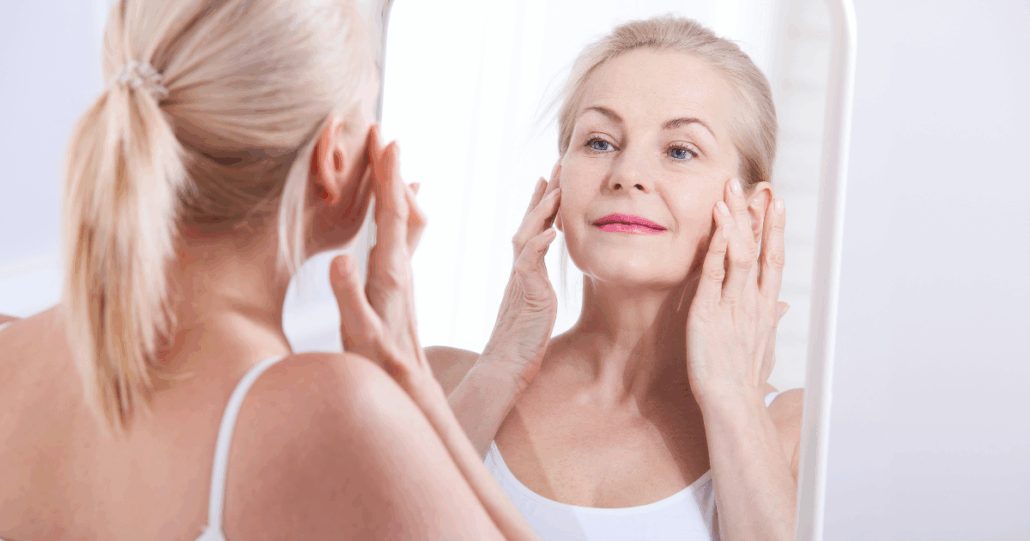
National Healthy Skin Month: What’s New in Skincare and Aesthetic Dermatology
By Maral Kibarian Skelsey, MD, FAAD, FACMS
Every year, the American Academy of Dermatology designates November as Healthy Skin Month. It’s a good time to pay attention to your skin and adopt habits that lead to a lifetime of healthy skin.
But youthful skin is about more than just smoothness — it’s also about firmness, tone, evenness, hydration, and overall skin quality. As dermatologists, we’re moving beyond simply relaxing facial muscles or filling lines. Today’s most effective anti-aging approaches work at the cellular and structural levels of the skin, helping it function — not just look — younger.
Let’s take a look at what’s new, what’s proven, and how modern dermatology is redefining the science of healthy aging.
Anti-Aging Skin Care Ingredients that Make a Difference
- Peptides: The Skin’s Tiny Communicators
One category of product you may have read about is peptides, which are short chains of amino acids—the building blocks of protein and collagen. In skincare, they act as messengers, signaling your skin to produce what’s missing.
New generations of signal peptides and carrier peptides help boost collagen production, support wound repair, and improve elasticity. Some even carry trace elements like copper that promote healing and firmness.
TO KNOW: Look for peptide creams whose formulations are backed by clinical testing, and remember that consistency matters more than concentration.
- Exosomes: The Next Frontier in Regenerative Dermatology
Exosomes are microscopic vesicles released by cells that help communicate and promote regeneration. In aesthetic dermatology, exosome-based treatments are emerging as powerful tools for collagen stimulation, skin rejuvenation, and healing after laser or microneedling procedures.
They’re not growth factors or stem cells themselves — but they help amplify the skin’s own repair signals, leading to improved tone, texture, and radiance.
While still relatively new, early studies show promising results, particularly when used under the supervision of a board-certified dermatologist.
- Biotech-Driven Ingredients: Lab-Grown Collagen and Advanced Actives
The cosmetic industry is harnessing biotechnology to create lab-grown versions of natural proteins, such as vegan collagen and bioidentical elastin. These ingredients can help mimic the structure of youthful skin — without animal sources — and are more sustainable to produce.
Other biotech innovations include stabilized retinoids, new forms of niacinamide, and encapsulated vitamin C that deliver actives deeper with less irritation.
TO KNOW: If your skin has become inflamed with traditional retinol or acids, these new-generation actives can provide similar benefits with improved tolerability.
How To Maximize Results From Anti-Aging Skin Care Products
How you use your anti-aging skin care products affects your results.
To help you get the best results from these products, dermatologists offer these tips.
- Start with one product. Using several anti-aging products at the same time can irritate your skin. When you irritate your skin, signs of aging become more noticeable.
- Test the product before applying it to your face or hands. Even hypoallergenic products can cause a skin reaction. To test a product, apply a small amount to your inner forearm. Repeat this twice a day for four to five days. If your skin looks normal — free of redness, itch, and other reactions — you can apply it to your face and other skin.
- Stop using a product that stings, burns, or tingles. These sensations mean that the product irritates your skin. Irritated skin looks older. If you are using a product prescribed by your dermatologist, ask if this should be happening before you stop using it. Some prescription-strength products will burn or sting.
- Follow directions. Some products contain active ingredients that can cause problems if you apply more than directed. You could end up with clogged pores, blotchy skin, or excessively dry skin. Read the instructions, and use as directed.
- Give the product time to work. A moisturizer can plump up fine lines in a few days, but most products take at least six weeks to work. Sometimes it can take up to three months. Be patient and give the product time to work.
- Continue using if you want to continue seeing results. People often stop using a product once they see results.
- Protect your skin from the sun. Sun protection helps to reduce signs of premature aging on your skin. It also allows your skin to repair and renew itself and reduces your risk of getting skin cancer.
- Use moisturizer. Moisturizer traps water in your skin. This extra moisture can help reduce the appearance of fine lines and brighten your complexion.
- Forget about tanning. Tanning speeds up the signs of aging on your skin. Tanning can lead to premature wrinkles, age spots, and other unwanted signs of aging.
For a specific product recommendation, talk with us.
If you do not see the results you want after following these tips, you may want to talk to us. As board-certified dermatologists, we can examine your skin and discuss how to stay healthy!
Give us a call or book your appointment online.


