

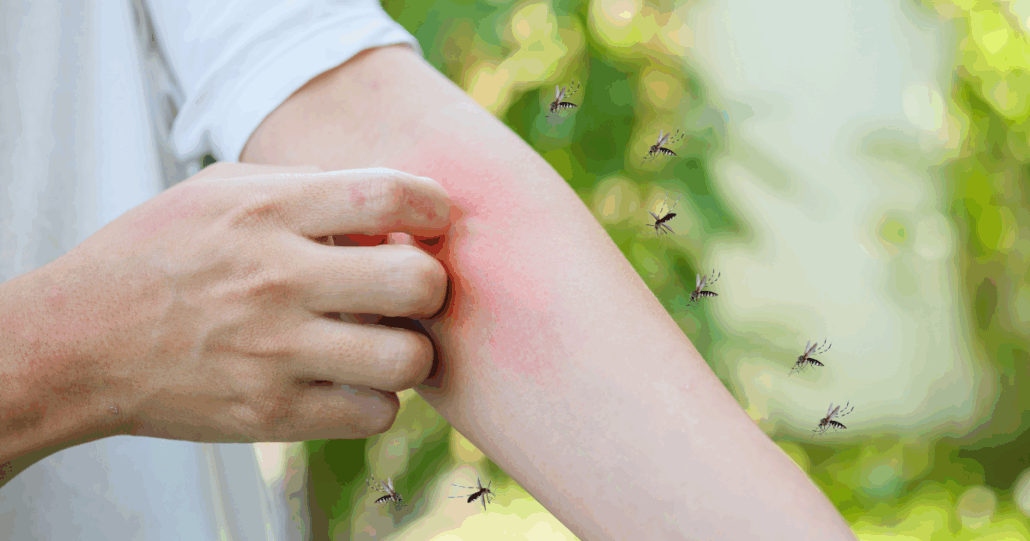
Summertime, and the Bugs Are Biting – Part 1
By Dr. Scott Norton
Earlier this month, I saw George Gershwin’s opera, Porgie and Bess. It was a wonderful performance, and I’ve been humming the opening aria, Summertime, for the past few weeks. Everyone knows the tune for Summertime, whose lyrics were written by George’s younger brother, Ira Gershwin, and their collaborator, DuBose Heyward. Since Summertime is my current earworm, the tune is on my mind as I write this blog post on summertime’s annoying critters. So, how about these lyrics?
Summertime,
And the livin’ is easy.
Bugs are bitin’ and the skeeters are high
Oh, your daddy’s itchy
and your mama is scratchin’
So, hush, little baby, don’t you cry!
One of these mornin’s,
you’re gonna get bitten.
Yes, you’ll scratch your skin
and you’ll wonder why.
But ’til that mornin,
there’s nothing can harm you,
With daddy and mammy standing by.
So hush, little baby, baby don’t you cry
The biting creatures of summertime are usually small, but they cause a lot of misery. They feed on blood, usually from animals other than humans, but let’s face it, people are also excellent sources of a blood meal. Bug bites and bug behaviors can cause itchy bumps, all kinds of rashes, and allergic reactions. Sometimes when we scratch, we unintentionally introduce common bacteria like staph (Staphylococcus aureus) into our skin, and that can lead to secondary infections, such as impetigo. And yes, some of these bugs spread disease — Lyme disease and West Nile Virus, for example.
In this essay, the word “bug” is used loosely. Scientists (and science-oriented readers) will correctly point out that many commonly found biting creatures are, in fact, not true bugs, but rather other types of irritating pests. When bugs bite, they’re usually trying to feed; when bugs sting, they’re usually trying to defend or protect themselves or their communities (like a beehive or an ant hill). But bites may hurt, itch, swell, or trigger allergic reactions. If your reaction to the bite is severe or simply uncomfortable, you may want to see your health provider. Keep in mind that it’s often difficult to determine what actually bit you, unless you actually catch the bug in the act (or take a sharply focused photograph) and get it identified.
In our area, the most common biting creatures are mosquitoes, horseflies, midges (or no-see-ums), and other biting flies; stinging insects such as bees, wasps, hornets, fire ants; and ticks, tiny creatures more closely related to spiders than to insects. These are our topics for this essay.
Part 1: Mosquitoes, Bees, Fire Ants & Ticks
Mosquito Bites: Itchy and Annoying
Female mosquitoes bite because they need blood meals to reproduce. (Male mosquitoes are vegetarians who feed on nectar and sap.) When mosquitoes bite, they inject saliva into your skin to keep your blood from clotting. Your body’s reactions to the insect’s saliva cause typical insect bite reactions, which appear as red, itchy bumps that can last a few days. Cortisone creams and anti-itch products help.
Some mosquitoes transmit viruses and cause diseases. In our area, West Nile Virus has been around for years, but several other mosquito-borne diseases are emerging threats in southern states. Zika, Chikungunya, dengue, and even malaria are among the worrisome emerging threats in southern states. By the way, house flies don’t bite, but they can spread germs. Keep them off your food.
Bee and Wasp Stings: Ouch!
Bees, wasps, hornets, and yellow jackets sting to protect themselves. Most stings cause redness, swelling, and pain. The stinger from a true bee stays in your skin and keeps pumping venom, so remove it quickly.
To reduce the itchiness and other signs of inflammation, treat insect bites with:
- Ice or cold compresses
- Antihistamines (oral)
- Cortisone creams
Some people are allergic to bites and may go into anaphylactic shock. They need emergency care and should carry an epinephrine injector like an EpiPen.
Fire Ants: Small but Dangerous
Fire ants are mostly in the South, but they’re spreading. They can both bite and sting. When disturbed (say, if you accidentally stepped on the ant hill that they call home) they quickly swarm over you. Their stings cause red bumps, pus-filled blisters, and sometimes allergic reactions.
Treatment:
- Ice or cold compresses
- Antihistamines (oral)
- Cortisone creams
Severe reactions require epinephrine and medical help.
Tick Bites: More Than Just a Bite
Ticks are blood feeders that attach to skin painlessly. They stay on for 1–3 days to get their meal, so it’s been important for them to evolve into biters that you might not notice.
All ticks can transmit some types of diseases. In our area, Lyme disease is the most common. A tick grows in size as it feeds – like a balloon being blown up.
Remove a tick with fine tweezers, grabbing it close to the skin. Avoid using heat or chemicals. Wash the area afterward and save the tick in a clear plastic bag to show your doctor. When bitten by a deer tick in a high-risk area (like the DMV), your doctor may prescribe a single dose of doxycycline, an antibiotic that can kill the first waves of the Lyme disease bacteria that enter your body.
Learn how to prevent tick bites here.
Getting Help for Bug Bites
Dermatologists are often experts in recognizing and treating insect bites and stings. If you’ve been bitten and are concerned, see your family doctor or your dermatologist. And if your symptoms are severe — like a life-threatening allergic reaction (known as anaphylaxis) to a bee sting — call 911 or go to the nearest emergency room.
If you see a doctor because of a bite, the doctor usually asks a lot of questions: When did the bites occur? Where were you when you were bitten? What were you doing? Were you gardening, camping, hiking, or playing sports in grassy fields? Have you travelled somewhere recently? Were you around pets, farm animals, or wildlife? These clues help us piece together what kind of creature might be causing the trouble.
In Part II, we’ll discuss some bugs that stick around year-round, like head lice, bed bugs, and scabies. We’ll finish with some myth-busting about spider bites and a peculiar issue known as “total body infestation.”
Stay tuned for Part 2 next month…
Reference:
Norton SA. Ectoparasite infestations and arthropod injuries, in Harrison’s Principles of Internal Medicine (21st ed.) Holland S et al (eds). New York: McGraw-Hill, 2025.


