

Do I Sweat Too Much? Learn About Hyperhidrosis
By Caroline Glick, PA-C, MPH
Hyperhidrosis, or excessive sweating, is underreported and underdiagnosed. Patients are often unaware that hyperhidrosis is a medical condition that can be treated and controlled.
Hyperhidrosis Symptoms
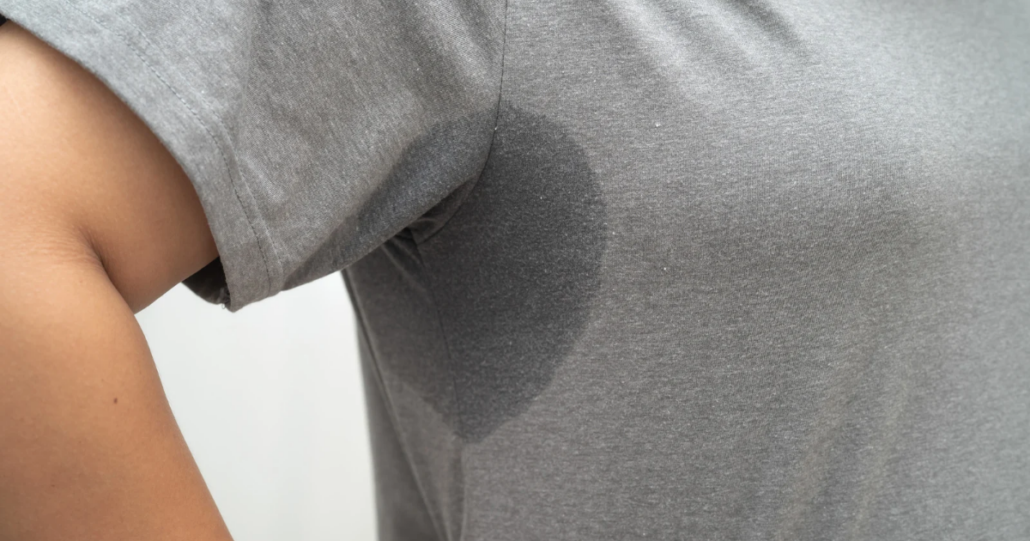
Those with hyperhidrosis have an increased risk of fungal, bacterial, and viral skin infections because their skin barrier is often compromised. Hyperhidrosis can also significantly impact a person’s quality of life. For instance, hyperhidrosis of the palms can make it difficult to shake hands or hold a pen without it slipping; hyperhidrosis of the underarms may lead to sweat stains on shirts; and hyperhidrosis of the feet can lead to damp socks and slippery sandals.
In fact, 75% of people with hyperhidrosis report negative impacts on their social life, emotional, and mental health. Excessive sweating can lead to embarrassment, anxiety, and added stress. Indeed, the prevalence of anxiety and depression in people with hyperhidrosis is higher than in people without hyperhidrosis.
There are two types of hyperhidrosis:
- Primary hyperhidrosis: The cause of excessive sweating is not from an underlying medical condition or medication.
- Secondary hyperhidrosis: The cause of excessive sweating is from an underlying condition or a medication.
Hyperhidrosis Treatments
While treatment for secondary hyperhidrosis often involves addressing the underlying condition or medication, once a diagnosis of primary hyperhidrosis is made, there are a variety of treatment options available to patients.
- Anti-perspirants: These are available both over-the-counter and in prescription strengths. Anti-perspirants work by forming temporary superficial plugs in the skin to stop sweating and work best when applied at night. However, they can sometimes cause irritation. Anti-perspirants are different than deodorants, as deodorants only mask smells.
- Qbrexza: This is a prescription medicated wipe. It is applied daily at home, and it blocks receptors that cause sweat gland activation.
- Sofdra: This is a prescription-strength topical gel. It is applied nightly at home and works to block chemical signals that cause sweating.
- Botulinum Toxin (Botox): This is FDA-approved to treat hyperhidrosis. Botox injections are administered under the skin. It works by stopping a chemical in the body that causes sweating. The effects usually last for 3-6 months.
- Iontophoresis: This is administered through a medical device that can be used by patients at home. The device causes a mild electric current to pass through water and the surface of the skin. Although the exact mechanism of action is not known, it can help reduce sweating.
- Microwave thermolysis (miraDry): This is an in-office procedure that eliminates sweat glands through electromagnetic technology.
- Oral medications: Oral medications that are known as anticholinergics can be prescribed “off-label” for hyperhidrosis. These medications work by blocking signals that normally cause the body to sweat. Sometimes these medications can cause dry mouth or dry eyes.
If you experience excessive sweating, please make an appointment with a provider here at Dermatologic Surgery Center of Washington, or near you, to discuss the best treatment options for you.
Sources:
International Hyperhidrosis Society. (n.d.). Antiperspirant Basics. https://www.sweathelp.org/hyperhidrosis-treatments/antiperspirants/antiperspirant-basics.html
International Hyperhidrosis Society. (n.d.). Hyperhidrosis and Mental Health. Impacthttps://www.sweathelp.org/home/hyperhidrosis-mental-health-impact.html
International Hyperhidrosis Society. (n.d.). Iontophoresis. https://www.sweathelp.org/treatments-hcp/iontophoresis.html
Parashar K, Adlam T, Potts G. The Impact of Hyperhidrosis on Quality of Life: A Review of the Literature. Am J Clin Dermatol. 2023 Mar;24(2):187-198. https://pmc.ncbi.nlm.nih.gov/articles/PMC9838291/


